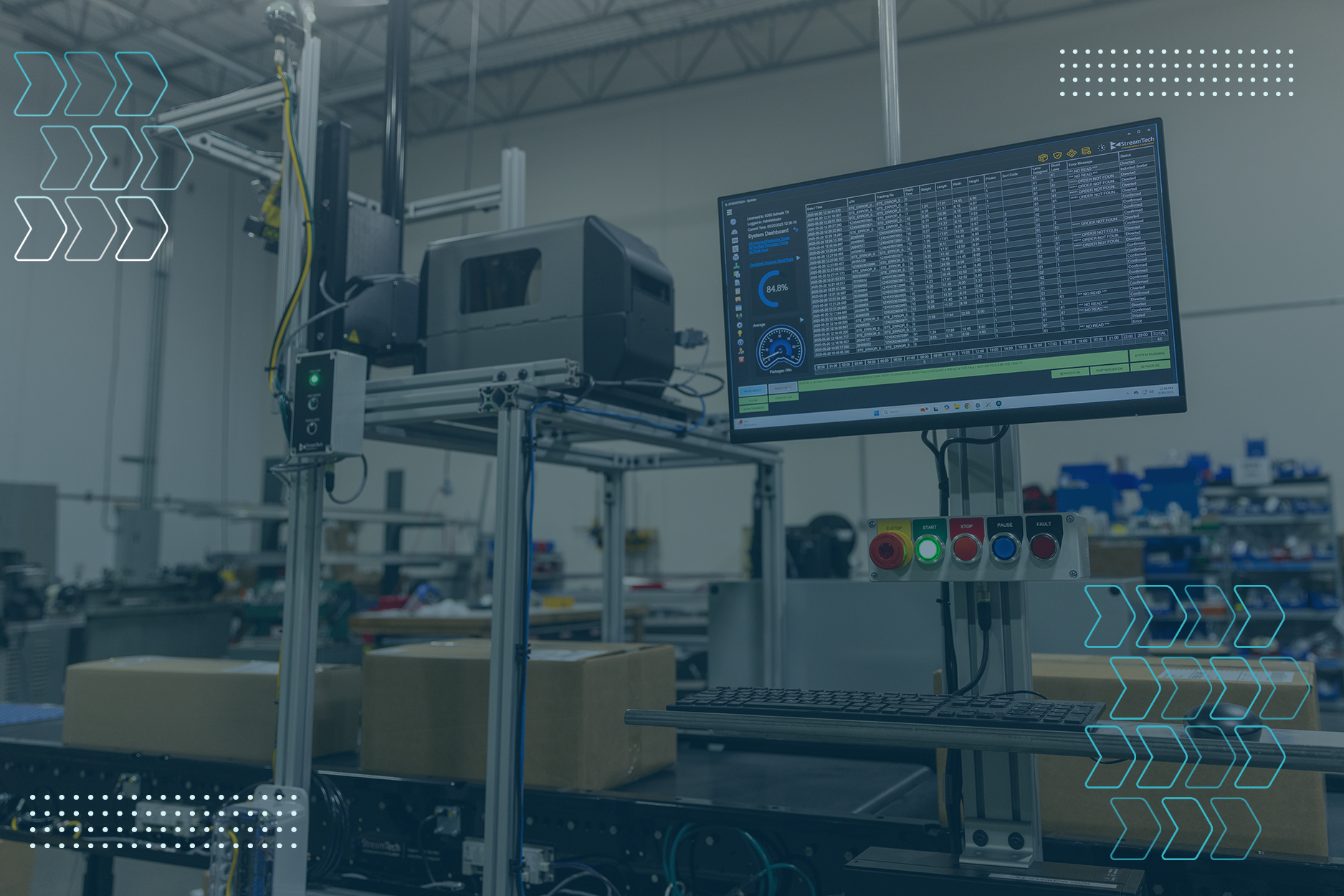

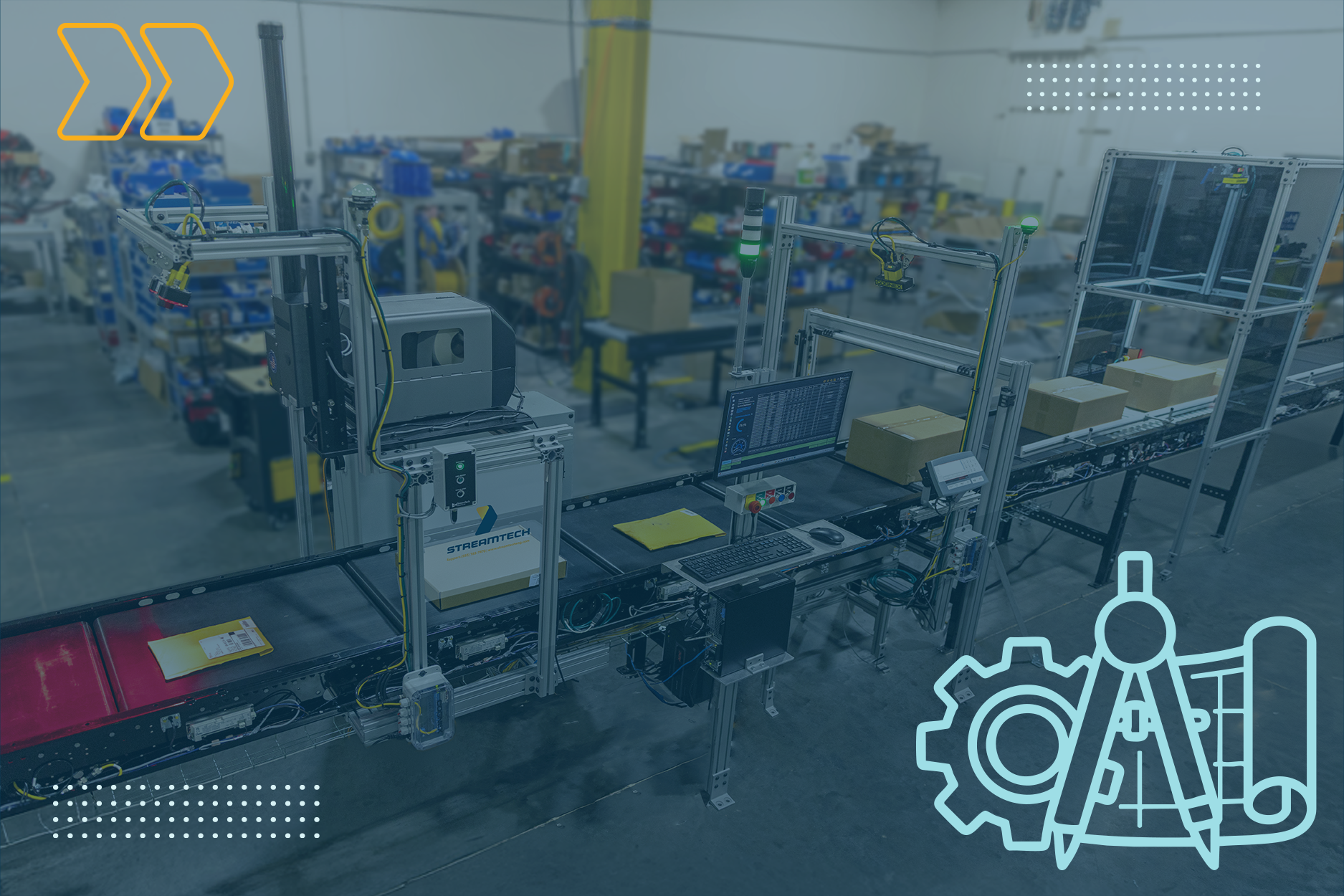
In a fast-paced distribution or e-commerce workflow, the SLAM line is a critical element to the whole operation’s success. End-of-line solutions must deliver every shipping label precisely when—and where—it’s needed. Successful SLAM installations strike a deliberate balance: They absorb fluctuations in host-system latency without sacrificing throughput, while providing robust error-handling for the rare cases where data is unavailable and latency strays outside expected bounds.
StreamTech’s portfolio of end-of-line conveyors and print-apply stations offers two types of design—accumulating and in-motion—each optimized for distinct operational profiles. Selecting the right approach begins with three fundamental questions:
- What is your target throughput? (packages per minute)
- How predictable is your label-generation latency? (mean and variance)
- What floor space and capital constraints shape your conveyor footprint?
The sections that follow unpack the design logic for each design and walk through a real-world example to illustrate how seconds translate into feet of conveyor.
Accumulating Conveyors: Built-In Buffering for Variable Latency
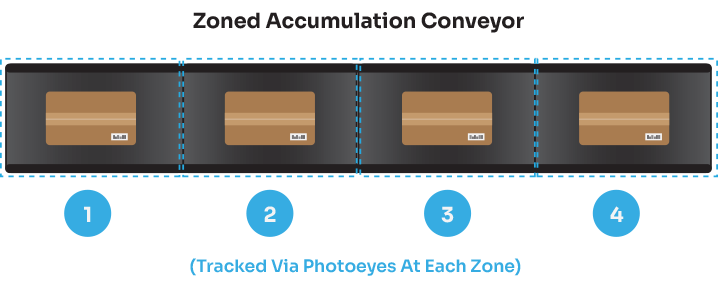
Accumulating conveyors operate in an intermittent motion, where each package is isolated to its own zone. Packages queue in these zones, granting downstream equipment—or the host ERP/WMS/WCS stack—additional time to fetch carrier rates, finalize manifesting, and deliver the requisite print file. When label data arrives, the first waiting package is advanced into position; if data are delayed, the package can sit safely until the file arrives. This makes systems with accumulating conveyors much more forgiving than in-motion. In short, accumulating conveyors allow the package to “wait” for a label if necessary.
Beyond latency buffering, accumulating designs simplify error management. Should label data fail to arrive within a defined timeout, the system can:
- Automatically print an “error” label indicating manual intervention is required.
- Divert the package to a side-lane or holding area, where operators can download missing data, verify package contents, or reroute as needed.
This approach trades a modest increase in floor space—and slightly lower maximum throughput—for enhanced resilience against host-system spikes and network jitter. In many 3PL or peak-season scenarios, that tradeoff proves invaluable: Manual interventions become exceptions rather than daily occurrences.
In-Motion Conveyors: Precision Throughput for High-Speed Lines
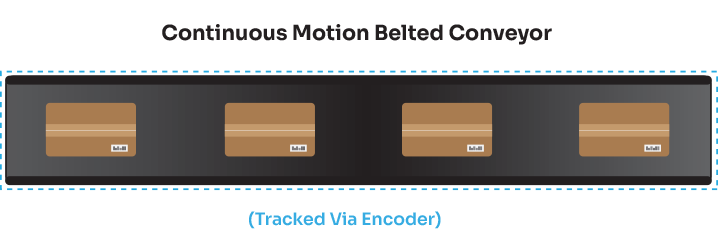
When peak throughput is paramount—such as high-volume parcel operations or just-in-time manufacturing—stopping the line for each package is untenable. In-motion systems maintain continuous package flow, allowing for increased throughput and the possibility of using multiple labelers on a line.
The design challenge here shifts from buffering time to matching the conveyor’s travel time with the host-system’s label-generation latency (L). To achieve this, engineers need to collect real-world latency data—that is, the round-trip time from package scan to print-file ready. This translates into the buffer needed to prevent stoppages.
For example, suppose your throughput target was 20 cartons per minute. Each carton is roughly 30 inches, and the in-motion scale is 36 inches. With a standard conveyor speed of 120 feet per minute, you would need approximately 15 feet of conveyor separating the scale exit from the print-apply head.
It is these kinds of measurements which ensure that the designed system functions as it needs to function to hit target goals without problems. By confirming both throughput and latency buffers, our engineers can design a robust in-motion solution that virtually eliminates stoppages while maintaining label accuracy.
Choosing the Right Path for Your Operation
StreamTech’s application engineering begins long before a conveyor is quoted. Our team conducts in-depth discovery calls and site visits to capture every nuance of your operation, including order profiles, SKU mix, peak-season volumes, and packaging exceptions. When it comes to labeling, we also consider throughput and latency metrics to ensure that you are getting the right solution for your needs. Our thorough process ensures that when your system is installed, it works seamlessly. (And if adjustments are needed, we take responsibility for making it right.)
Accumulating conveyors offer simplicity and built-in resilience against sporadic host delays, making them an excellent fit for moderate-volume lines or facilities with ample floor space. In-motion systems demand more precise engineering but reward you with maximum throughput and minimal manual interventions—essential for high-speed parcel operations and just-in-time manufacturing.
At StreamTech, our engineers blend deep expertise in conveyor dynamics, label-printing mechanics, and WCS software integration to craft end-of-line solutions tailored to your unique requirements. From initial data collection to final commissioning and beyond, we ensure your labeling process operates with pinpoint accuracy and uninterrupted speed.
Ready to optimize your end-of-line performance? Contact StreamTech Engineering today for a consultation and discover how our proven methodologies can elevate your labeling accuracy, throughput, and overall operational efficiency.