
Estimated reading time: 9 minutes
For many growing fulfillment operations, shipping starts as a mostly manual process. Orders are packed at workstations, cartons are placed on scales, dimensions are captured manually or estimated, shipping data is keyed into a system, carrier labels are printed, and team members apply those labels by hand.
That approach can work for a while. But as order volume grows, customer expectations increase, and carrier requirements become more complex, manual shipping can quietly become one of the biggest bottlenecks in the warehouse.
The challenge is knowing when the process has reached that point.
Here are five signs your shipping operation may be ready for automation.
1. You Are Trying to Squeeze in More Pack Stations (and People)
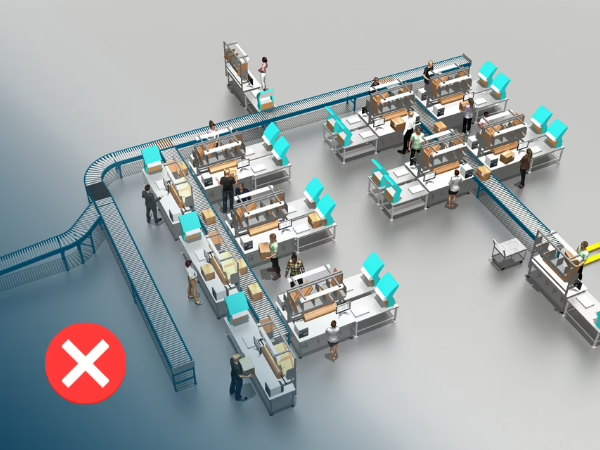
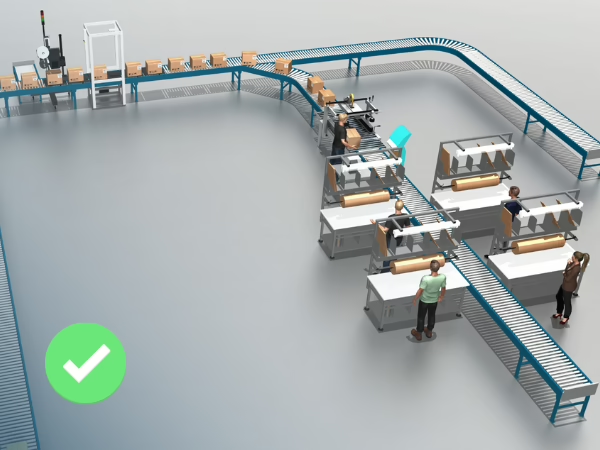
(Automated shipping can greatly reduce the number of pack stations required)
One of the clearest signs that your shipping process is under strain is when your team can no longer keep up with daily outbound volume using the pack stations and labor you have available. At first, the answer may seem simple: add more people. Then add more pack tables. Then add another printer, another scale, another scanner, and another workstation.
But eventually, this approach creates its own problems.
You may find yourself asking:
- Is there enough warehouse space to accommodate more pack stations?
- Do we have enough people to staff every pack station?
- Does every pack table have the same equipment?
- Are packed orders sitting idle because labeling cannot keep up?
- Are we relying on overtime just to hit daily shipping cutoffs?
Shipping Automation Impact:
When throughput depends on adding more manual stations, the operation can quickly become difficult to scale. A shipping automation system can help by moving repetitive steps like scanning, weighing, dimensioning, labeling, and sorting into a more consistent automated flow.
Instead of trying to squeeze more pack tables into the same footprint, automation can help increase throughput without a proportional increase in labor or floor space.
2. Your Team Members Perform Duplicate Repetitive Tasks
This second point is very closely related to the first, but is more specific. When a large number of the team is performing the same tasks as one another, it’s probably time to consolidate those tasks into an automation system. For example, when relying on manual labor, each team member performs the same tasks, weighing, hand-keying data, and labeling. This means one automated system can make a huge impact on the operation. Freeing up labor for higher-value activities like picking, replenishment, quality checks, exception handling, or customer-specific packing requirements.
In many manual shipping operations, experienced warehouse associates spend a large portion of their day performing the same repetitive steps:
- Insert packing slip and seal the box
- Place box on scale
- Capture or enter weight
- Measure or estimate dimensions
- Select carrier or service
- Enter or verify shipping data
- Print carrier label
- Apply label by hand
- Move box to the side
These tasks are necessary, but they are not a good use of labor. This also introduces variation. One associate may enter dimensions differently than another. Labels may be applied in slightly different locations. A package may be set aside while someone waits for a system response. Over the course of hundreds or thousands of shipments per day, those small differences can add up. (These will be elaborated on more in the next few sections).
Shipping Automation Impact:
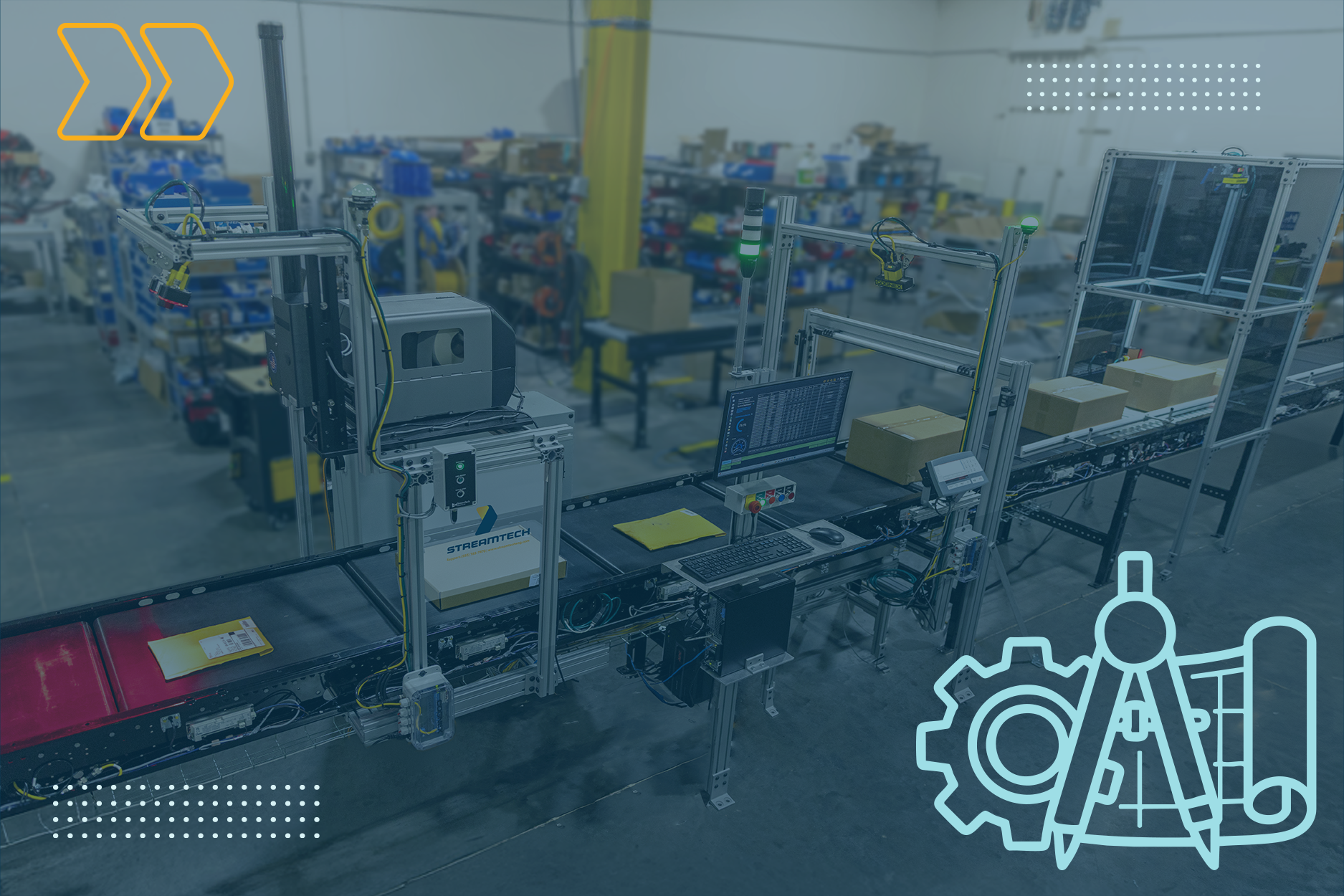
Automation brings more consistency to the process. With the right system, cartons can be scanned, dimensioned, weighed, labeled, and sorted as they travel through the shipping line. That allows the team to focus less on repetitive manual processing and more on managing exceptions and keeping orders moving.
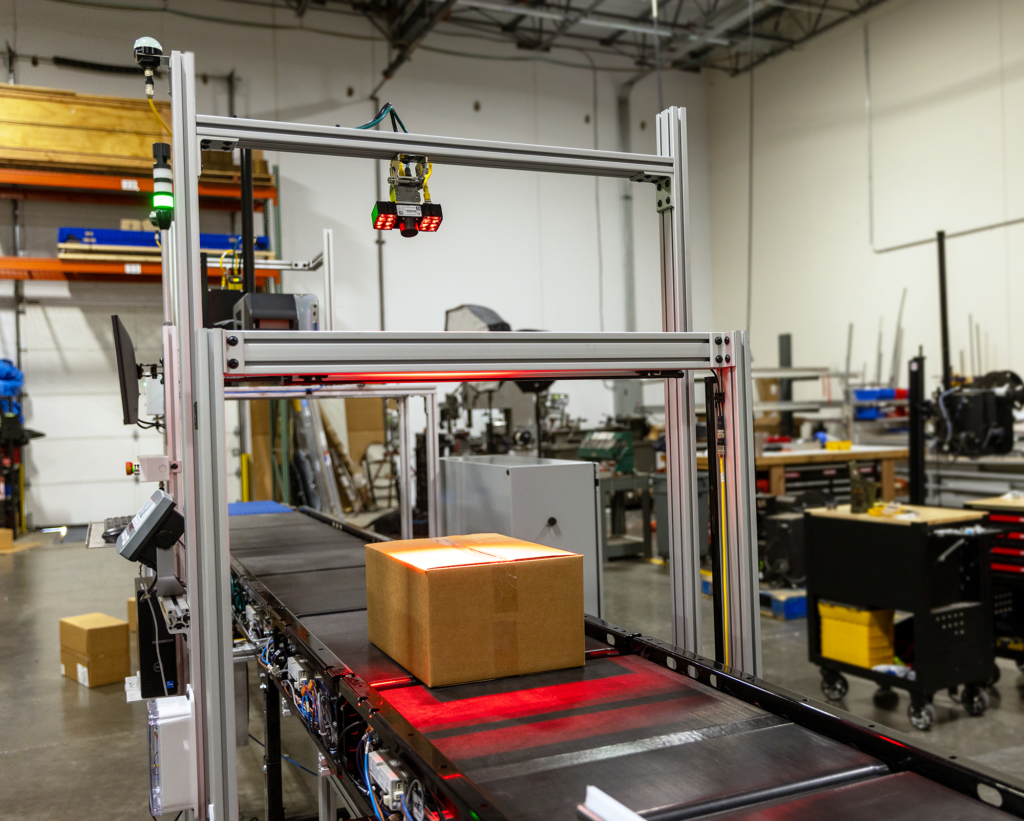
(Picture showing automated scan, weigh, dimension on a conveyor system)
3. Peak Season Requires Huge Seasonal Spikes in Labor
Peak season has always been challenging, but for many fulfillment operations, seasonal labor has become harder to recruit, train, and retain. If your shipping process depends heavily on temporary labor, you probably face the same issues every year:
- Hiring enough people in time for peak
- Training seasonal employees quickly
- Maintaining accuracy with less-experienced staff
- Managing overtime and extended shifts
- Keeping up with carrier pickup deadlines
- Preventing burnout among full-time team members
Manual shipping processes often become most fragile when volume is highest. That is also when errors, delays, and bottlenecks are the most costly. This same issue presents itself in a different way when the volume slows. Scaling labor back can be equally challenging and demoralizing for the rest of the team.
Shipping Automation Impact:
Automation can help reduce the amount of seasonal labor required to support peak volume. Shipping automation runs at a set throughput, so if it’s designed for an above-average order volume, it can scale up and down with your business needs without issue. It can also simplify the work that remains. Instead of training a large temporary team to operate multiple shipping stations, select carriers, apply labels, and make judgment calls, automation can standardize much of the process.
For growing operations, this can make peak season more manageable and less dependent on finding a large number of short-term employees.
4. You Are Stuck with a Single Shipping Carrier
Adding carriers can be a smart way to control shipping costs, improve service levels, and create more flexibility. But in a manual shipping environment, more carriers can also mean more complexity.
Your team may need to understand different carrier rules, service levels, label formats, cutoff times, parcel requirements, and exception processes. If that complexity lives mainly in the hands of individual employees, adding carriers can feel risky. It can also add time to each order, which is already at a premium in a manual operation.
As a result, some operations stay with one primary carrier because it feels simpler, even if it is not always the most cost-effective option. The business may be missing opportunities to rate shop between carriers, choose better service levels, improve delivery performance, or reduce shipping costs based on package size, weight, destination, and delivery requirements.
Inaccurate dimensions and weights can make the problem worse. Estimated dimensions, inconsistent data capture, and manual entry mistakes can lead to dimensional weight charges, carrier adjustments, and other added costs. But the larger issue is that manual processes often make it difficult to take full advantage of a true multi-carrier shipping strategy.
Shipping Automation Impact:
Shipping automation can make multi-carrier shipping much easier to manage. As packages move through the system, they can be scanned, dimensioned, weighed, and sent to a multi-carrier software platform in real time. That platform can rate shop on the fly, select the best carrier and service level, and return the correct label for automatic application. From there, integrated sortation can send each package to the appropriate carrier lane, service-level lane, or outbound destination. This allows the operation to add carrier flexibility and cost-saving opportunities without asking pack station employees to manually manage more rules, labels, or sorting decisions.
The result is a shipping process that can support smarter carrier decisions, more accurate package data, and greater flexibility as volume grows.
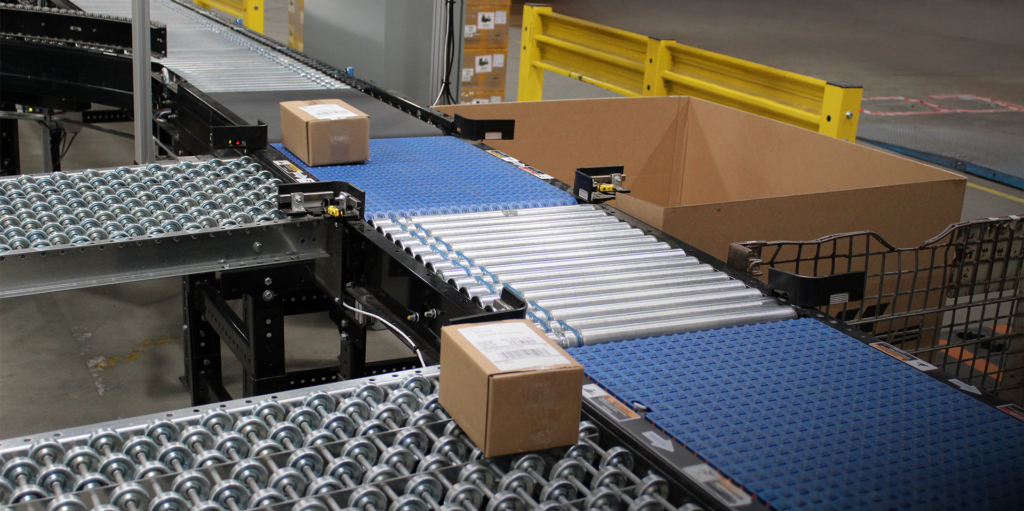
(Picture showing automated sortation system into either gravity or gaylord)
5. It’s Becoming Harder to Track Shipping Errors to the Root Cause
Errors happen in every fulfillment operation. The issue is whether your process is designed to prevent those errors before they reach the customer.
Manual shipping processes can create several common problems:
- A package shows as shipped, but never physically left the building
- A label is applied to the wrong carton
- A carton is sent to the wrong customer
- An order is missing items
- A package is sorted to the wrong carrier lane
- Customer service has limited visibility into what actually happened
These issues can be frustrating for customers and expensive for the business. They can also be difficult to investigate if the shipping process does not create a reliable record of each package as it moves through the operation. In a manual environment, many of the most important checks depend on individual employees remembering each step, scanning at the right time, applying the right label, and moving the package to the right location. each package as it moves through the operation.
Shipping Automation Impact:
Shipping automation is designed to program many errors out of the process before they reach the customer. With the right controls and WCS software in place, packages only advance when the system has scanned, verified, and confirmed the required information.
A package can be scanned to confirm its identity, weighed and dimensioned to validate shipment data, labeled automatically, and verified again after labeling to confirm the right label was applied to the right carton. If something does not match, the package can be stopped, rejected, or diverted for exception handling before it reaches the carrier.
This creates a more controlled and traceable process, with automation systems typically designed for accuracy well above 99%.
When manual shipping starts limiting growth
When order volume grows, labor gets tighter, carrier rules become more complex, and errors become harder to manage, the shipping process can start to limit the business.
If several of these challenges sound familiar, it may be time to evaluate whether shipping automation can help your operation scale.
StreamTech Engineering designs and integrates fulfillment automation systems that help growing operations improve throughput, reduce manual touches, and create more consistent outbound shipping processes.
From dimensioning, weighing, print-and-apply labeling, and sortation to controls, software, and system integration, StreamTech helps companies build shipping automation systems that fit their operation, their volume, and their growth plans.
Ready to evaluate your shipping process?
If your team is working harder every year to keep up with outbound volume, it may be time to take a closer look at automation.
Contact StreamTech Engineering to discuss whether an automated shipping system could help your operation improve throughput, reduce labor dependency, and support long-term growth.
Key Takeaways
- Adding more pack stations and labor is not a sustainable growth strategy.
- Repetitive shipping tasks are strong candidates for automation.
- Heavy reliance on seasonal labor can signal a shipping bottleneck.
- Automation makes multi-carrier shipping easier and more cost effective.
- Automated verification helps reduce shipping errors and improve visibility.
- Shipping automation increases throughput while reducing manual touches.