

Estimated reading time: 5 minutes
In warehouse automation, and fulfillment automation specifically, performance isn’t measured only in shipments per hour; it’s measured in trust. When customers expect a fresh product on Friday or a guaranteed delivery before the holidays, a single breakdown can ripple outward, causing wasted inventory, missed deadlines, and, eventually, unhappy customers and damage to your brand.
That’s why business critical fulfillment shouldn’t just be about efficiency. In fact, fulfillment is just as much about protecting revenue and reputation. This is exactly why StreamTech developed its own proprietary Warehouse Control System (WCS), to serve as the real-time control layer that keeps automated fulfillment on track when conditions are less than perfect.
Why Traditional Systems Break Under Pressure
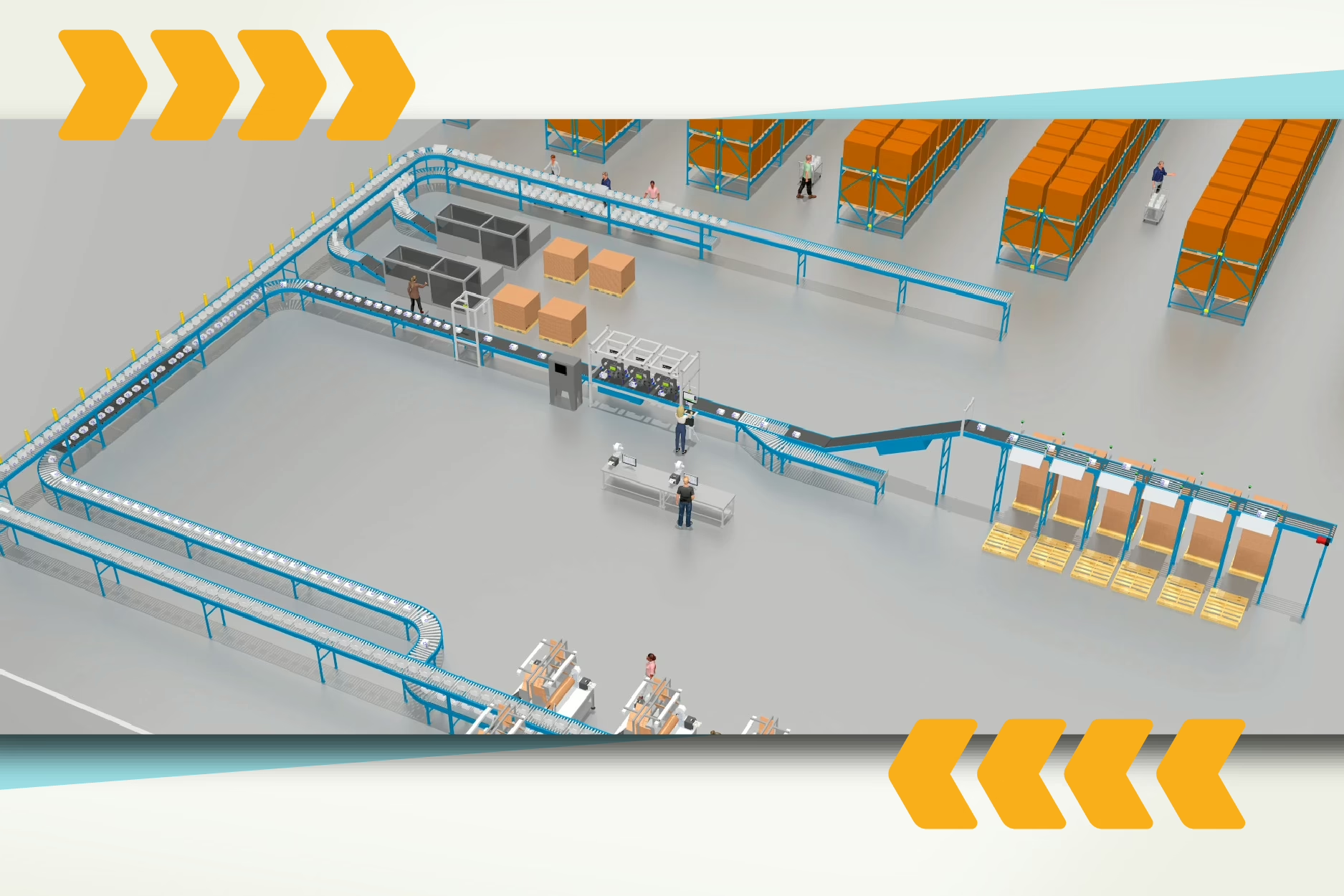
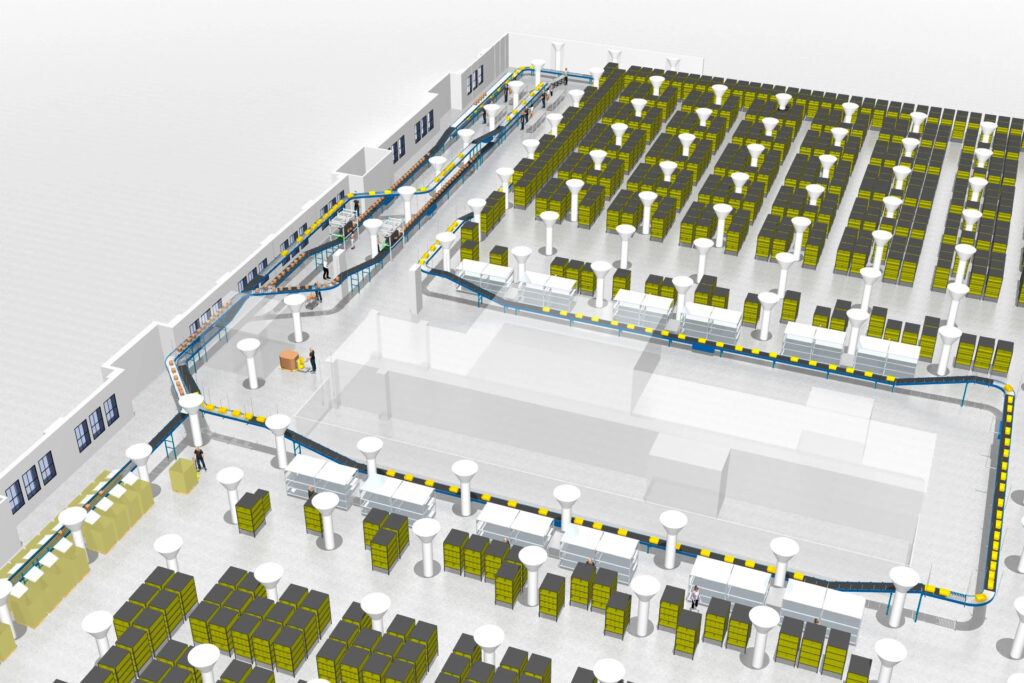
Most warehouse leaders rely on a Warehouse Management System (WMS) to coordinate their operations. A WMS excels at managing orders, inventory records, wave planning, and labor assignments. But when it comes to orchestrating automated equipment – conveyors, sorters, scanners, scales, and print-and-apply shipping systems – a WMS simply isn’t designed to operate at the speed or granularity required.
A WMS does not know whether a carton is physically sitting at a merge, stalled at a divert, or waiting for a label to be applied. It cannot dynamically route cartons in real time, throttle order release based on downstream congestion, or react instantly when a printer faults or a sorter lane fills up. That gap becomes painfully obvious during volume spikes or equipment hiccups.
Without an intelligent control layer, the fulfillment process is forced to function manually.
A WCS fills this gap by making millisecond-level decisions about flow, routing, and validation. It tracks the real-world state of every carton and every device, translates that into actionable data for the WMS, and continuously adjusts how orders move through the system to keep fulfillment stable.
How a WCS Actually Impacts the Operation
At its core, a WCS acts as the translator and traffic controller between software intent and physical reality.
- It confirms what the automation equipment is actually doing, feeding accurate, real-time status back to the WMS rather than relying on assumptions.
- It acts as a buffer between picking and shipping, providing flexibility for how orders flow through the fulfillment process. Such as matching picked UPCs to the correct order in the database.
- It dynamically routes cartons through the path of least resistance, sending orders around congestion, offline devices, or temporary bottlenecks.
- It manages packing slip printing, label generation, and carrier sort logic based on real-time order attributes rather than static waves.
- It enforces accuracy through checkweigh, scan verification, and order completeness checks before cartons are released downstream.
- It controls order flow so upstream picking is paced to downstream capacity, preventing backups that would otherwise require manual intervention.
In short, the WCS is the system making continuous, real-time decisions so people don’t have to.
Real-World Scenarios Where WCS Makes a Difference
Let’s take a quick look at two scenarios where a good WCS makes a difference:
Perishables on Deadline
Consider a subscription service shipping fresh food. The cutoff is non-negotiable. Cartons must be picked, packed, labeled, and handed off to the carrier by Thursday afternoon to guarantee Friday delivery. Miss that window, and product may spoil over the weekend.
In this environment, every equipment fault is a potential crisis. A stalled printer, a scale fault, or a blocked divert can quickly cascade into missed shipments.
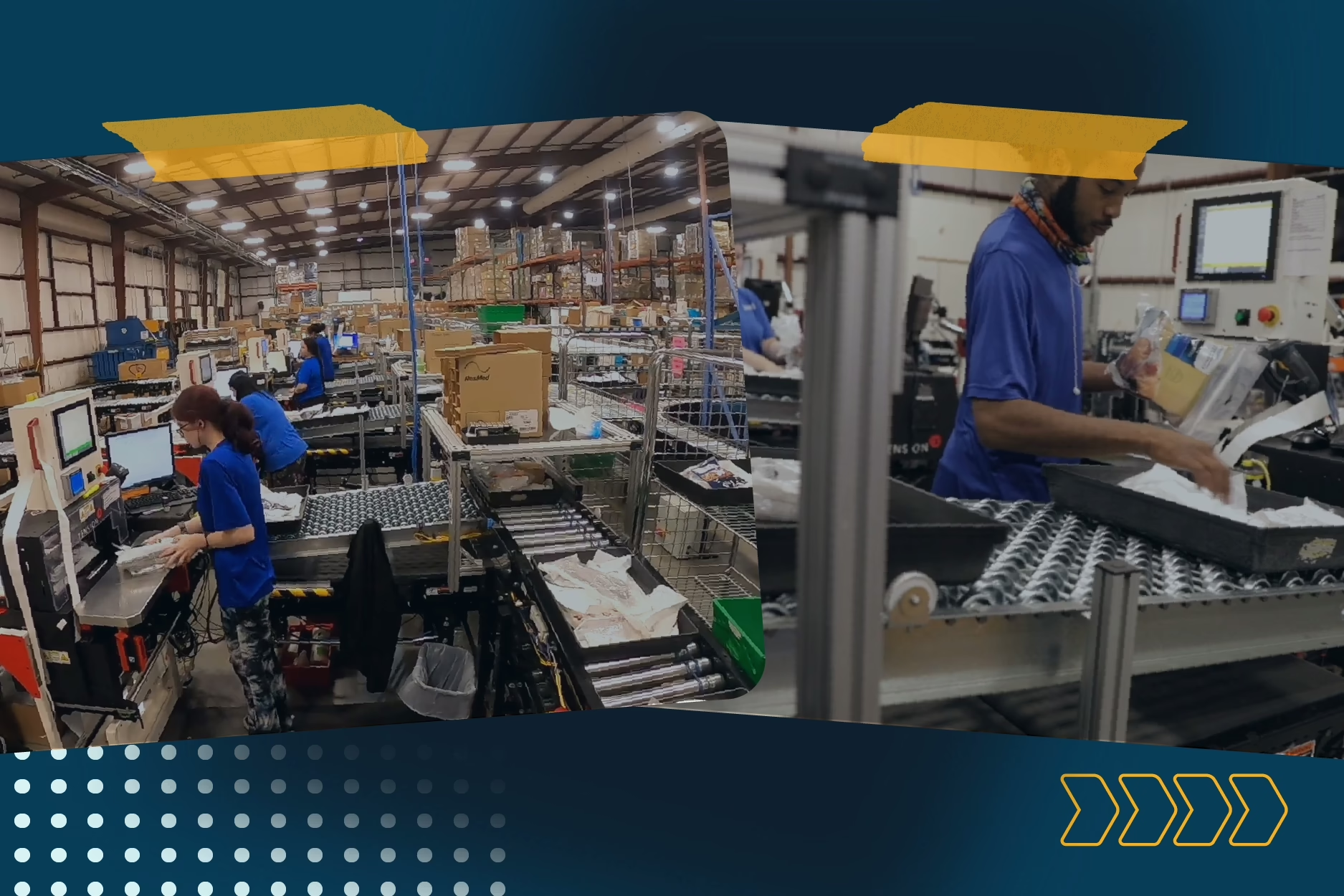
With a WCS in place, cartons are automatically rerouted when a device goes offline. Orders nearing cutoff are prioritized in the flow. Supervisors receive live alerts tied to specific equipment and specific orders, allowing intervention before the problem escalates. The result is consistent throughput without last-minute fire drills or risky manual workarounds.
Peak Season Surges
The same dynamics apply during peak retail seasons. Order volume may double or triple in a matter of days, and designing hardware to handle the single busiest day of the year is rarely cost-effective.
A WCS enables a smarter approach. By throttling order release, balancing load across sort lanes, and dynamically adjusting routing logic, the system absorbs spikes without overwhelming any single area of the operation. Picking, packing, and shipping stay synchronized, even as volume fluctuates hour by hour.
Instead of throwing labor at the problem, the software keeps flow under control.
Beyond Throughput: Managing Risk in Fulfillment Automation
When fulfillment leaders evaluate automation, they often focus on productivity gains. But in business-critical fulfillment, the bigger question is risk. What happens if something goes wrong?
Those costs are measured not just in labor or equipment downtime but in lost sales, spoiled goods, carrier chargebacks, and churned customers. And in competitive markets, reputation can be harder to win back than dollars.
A WCS acts as insurance against those risks. By responding in real time, validating every order, and keeping material moving intelligently, it prevents small disruptions from becoming operational failures. It allows fulfillment teams to keep promises to customers, even under pressure.
Making WCS a Strategic Priority
As warehouses automate more processes, the challenge shifts from what equipment to buy to how to orchestrated it. For operations handling perishables, subscription models, or seasonal surges, the answer is clear: Build WCS into the strategy from the start.
A Warehouse Control System doesn’t just optimize fulfillment automation; it safeguards the things that matter most: your revenue, your reputation, and the trust that keeps customers coming back.
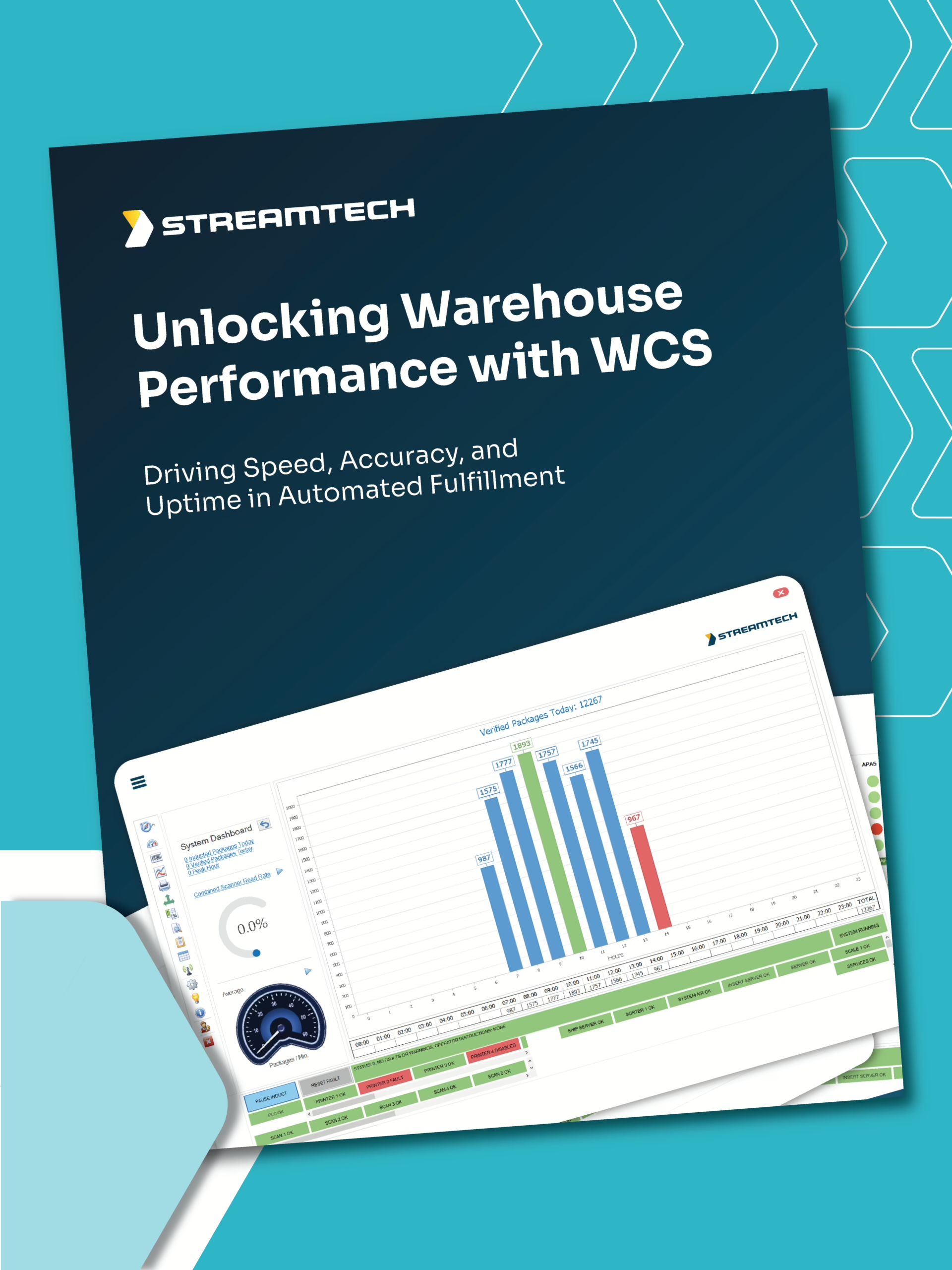
For more on the use of WCS in the warehouse and its role in warehouse automation, download our white paper, Unlocking Warehouse Performance with WCS: Driving Speed, Accuracy, and Uptime in Automated Fulfillment.